Model your collaboration deal the way builders actually price it: floor split, construction cost, builder margin and the cash component you can expect, all with editable market rates for your colony.
Enter your plot details, choose a floor split, and adjust the rates for your colony
This is an indicative model using the residual method with your inputs, as of August 2026. Actual collaboration offers depend on colony, plot dimensions, road width, corner or park-facing position, basement potential, roof rights and market conditions. For the construction cost side of the deal, see our construction cost calculator. Sujeet Engineering Solutions structures and executes collaboration projects end to end and provides exact proposals after a free site assessment.
In a collaboration, you provide the plot and the builder provides everything else: demolition, sanction, construction and finishing, entirely at the builder's cost. The new floors are divided between you and the builder under a registered collaboration agreement, and in most Delhi deals the builder also pays you a cash component.
Cash Component = Builder's Sale Revenue − Construction Cost − Approvals & Other Costs − Builder's Margin
This is the residual method, and it is exactly how builders price their offers. It also explains the trade-off every owner faces: keep more floors and accept less cash, or keep fewer floors and maximize the cash component. The sale rate of builder floors in your colony moves the number more than any other input.
A registered collaboration agreement records the floor split, cash component, specifications, timeline, stilt parking allotment and roof rights.
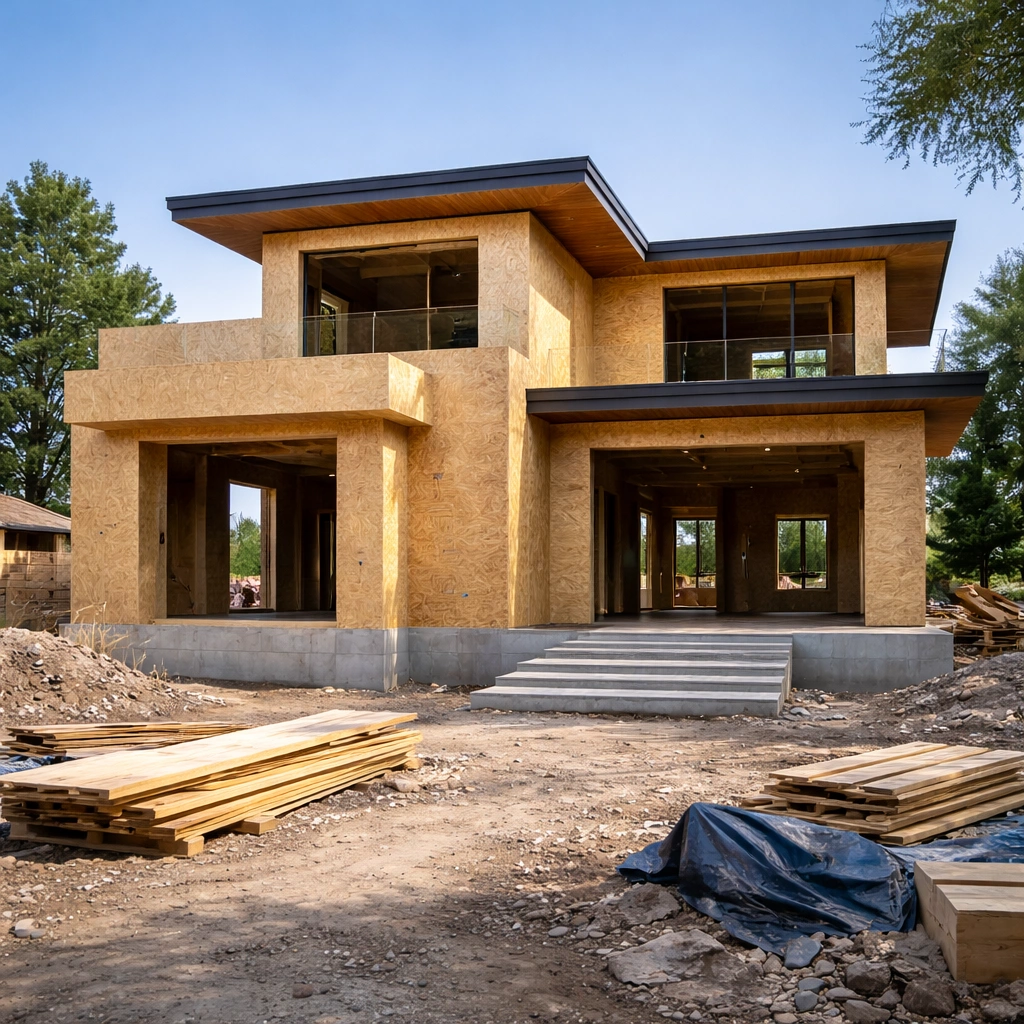
The builder handles demolition, sanction from the corporation, construction with stilt and lift, and finishing, typically over 12-18 months.
You take possession of your floors, receive the agreed cash component per the payment schedule, and the builder sells their floors to recover cost and profit.
Structures Built
Quality Tested
How floor splits and cash components typically trade off
| Structure | Owner Receives | Builder Receives | Cash Component Tendency |
|---|---|---|---|
| Stilt + 4: Owner 3, Builder 1 | 3 floors | 1 floor to sell | Low or nil; works mainly in premium colonies where one floor sells very high |
| Stilt + 4: Owner 2, Builder 2 | 2 floors + cash | 2 floors to sell | Moderate to high; the most common Delhi structure |
| Stilt + 4: Owner 1, Builder 3 | 1 floor + maximum cash | 3 floors to sell | Highest; chosen by owners prioritizing liquidity |
| Stilt + 3: Owner 2, Builder 1 | 2 floors | 1 floor to sell | Low to moderate, depending on colony rates |
| Stilt + 3: Owner 1, Builder 2 | 1 floor + cash | 2 floors to sell | Moderate to high |
Indicative structures as commonly seen in Delhi NCR collaborations, August 2026. Roof rights, basement and stilt allotment are negotiated separately and shift deal value.
Common questions about builder floor collaborations in Delhi
A builder floor collaboration is an arrangement where a plot owner provides the land and a builder reconstructs a multi-story builder floor building entirely at the builder's cost. The completed floors are divided between owner and builder as per a registered collaboration agreement, and in most deals the builder also pays the owner a cash component. The builder recovers cost and profit by selling the floors received.
On plots where stilt plus four floors are permitted, the most common structure is the owner keeping two floors and the builder taking two. Owners in premium colonies sometimes keep three floors and give one with little or no cash, while owners who want maximum cash keep one floor. On stilt plus three buildings, two-one splits in either direction are standard.
Builders use the residual method: expected sale revenue from the builder's floors, minus total construction cost, minus approval and other project costs, minus the builder's profit margin. Whatever remains is available as cash to the owner. This is why the builder floor sale rate in your colony drives the cash component more than any other factor.
The builder bears the entire cost: demolition, construction, sanction and approval fees, and professional charges. The owner typically pays nothing during construction. The owner's contribution to the deal is the land itself, which is why owners receive both floors and, in most cases, a cash component.
The builder receives one or more floors to sell in the open market. The sale proceeds must cover the full construction cost, approvals and other expenses, the cash paid to the owner, and still leave the builder a profit margin, which typically runs 15-25% of their sale revenue depending on the colony and market conditions.
Stilt parking slots are usually allotted floor-wise in the agreement. Roof and terrace rights are a negotiated item: they are often attached to the top floor, sometimes shared among all floors, and occasionally retained separately. Whatever is agreed must be written explicitly into the registered collaboration agreement to avoid disputes later.
No. The result is an indicative estimate using the residual method with your inputs. Actual offers vary with colony, plot dimensions, road width, corner or park-facing position, basement potential and market conditions. Sujeet Engineering Solutions structures and executes collaboration projects end to end and can give you an exact proposal after a site assessment.
Free site assessment, exact floor split and cash component offer, and end to end execution
Share your plot details and our team will prepare an exact deal proposal
Modeled your deal? Send us the numbers and we will validate them against real colony rates and give you a firm floor split and cash component proposal.
Dwarka, New Delhi
+91-83830-35590
info@sujeetengineering.solutions